The Stars Are Finally Aligning: Why Capcom Needs to Bring Onimusha Back Right Now

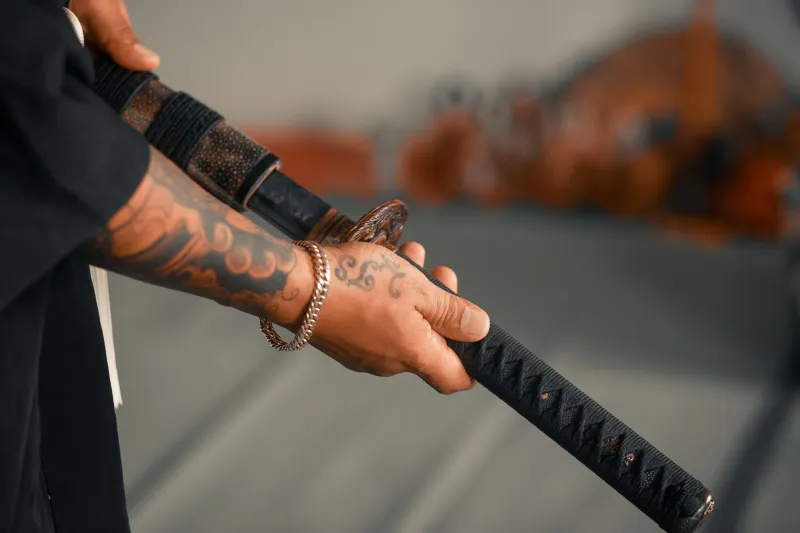
Photo by Photo by Su San Lee on Unsplash on Unsplash
Let me paint you a picture. It's 2024. Ghost of Tsushima has sold over ten million copies and spawned a multiplayer mode that people are still actively playing. Sekiro: Shadows Die Twice sits comfortably in the pantheon of modern classics. Japanese period dramas are pulling massive streaming audiences. And somewhere in Capcom's vault, one of the most beloved action franchises of the PS2 era is collecting dust.
Onimusha deserves better than that. And honestly? The market is screaming for it.
The Cultural Moment Is Right Here, Right Now
For a long time, the conventional wisdom in Western gaming markets was that feudal Japan settings had limited mainstream appeal. Publishers treated them as niche products — cool, sure, but not system sellers. That assumption has been thoroughly dismantled over the last several years.
Ghost of Tsushima didn't just succeed; it became a cultural touchstone. Players who had never touched a samurai game in their lives were suddenly obsessed with Mongol-hunting and haiku composition. The Hulu adaptation of Shōgun pulled record ratings in 2024. The appetite for authentic, beautifully rendered Japanese historical settings is bigger in the US right now than it has arguably ever been.
Onimusha was built for exactly this moment. Its blend of Sengoku-era history, supernatural horror, and character-driven storytelling is precisely the kind of IP that could capture both the Ghost crowd and the Soulsborne crowd simultaneously. That's not a small audience. That's a massive one.
What the Franchise Already Has Going for It
Here's the thing about Onimusha that sometimes gets lost in nostalgia: the core concept is genuinely great. A disgraced samurai absorbs the power of demons to fight an oni-fueled invasion of feudal Japan. That's a pitch that writes itself. The original trilogy built out a rich mythology, a cast of memorable characters, and a combat system that still feels snappy and satisfying in ways that many modern action games struggle to match.
Samanosuke Akechi is a legitimately compelling protagonist. His arc across the first three games — from disgraced warrior to supernatural force of nature — has the bones of something that could resonate with a current-gen audience raised on morally complex heroes. You don't need to reinvent him. You just need to let him breathe in a world that looks as good as he deserves.
The 2019 remaster of Onimusha: Warlords was a quiet but meaningful proof of concept. It sold well enough to get people talking, landed on multiple platforms, and introduced the series to players who were born after the PS2's peak years. Capcom already knows there's renewed interest. The question is whether they're willing to act on it.
What a Modern Reboot Actually Needs
Let's be real about something: a straight port of the PS2 design philosophy isn't going to cut it in 2024. The fixed camera angles, the deliberately limited movement options, the ink ribbon saves — these were products of their time, and while they hold nostalgic charm, a full-scale reboot needs to evolve.
The good news is that the blueprint for doing this right already exists. Look at what Capcom itself did with Resident Evil 2 and 4. They took the essential DNA of those games — the atmosphere, the pacing, the character dynamics — and rebuilt the surrounding mechanics for a modern audience without losing what made the originals special. That same approach applied to Onimusha could be genuinely electric.
Imagine a Samanosuke with the fluid movement options of a modern action hero, combined with the deliberate, timing-based combat that defined the original trilogy. Throw in a world rendered at PS5 fidelity — the kind of environmental detail that makes Ghost of Tsushima's Tsushima Island feel like a place you could actually step into — and you've got something that could compete at the highest level of the genre.
Narratively, there's room to expand too. The Oni/Genma conflict has cosmic implications that the original games only scratched the surface of. A modern entry could deepen the lore, introduce new playable characters, or even explore different periods of Japanese history within the same supernatural framework. The world-building potential here is enormous.
The Competition Has Done the Heavy Lifting
One of the trickiest parts of reviving a dormant franchise is convincing a publisher that the audience exists. Capcom doesn't have to make that argument to themselves anymore — the market has already made it for them. Sekiro proved that demanding samurai combat has a massive global fanbase. Ghost of Tsushima proved that Western players will invest deeply in Japanese historical settings. Nioh proved that there's an audience specifically hungry for supernatural samurai action.
Every one of those games owes at least a small debt to what Onimusha built in the early 2000s. They've been eating the franchise's lunch for years. It's time for the original to come back and reclaim some of that table.
This Isn't Just Nostalgia Talking
Look, we're a fan site. Of course we want Onimusha back. But this argument isn't just about wanting to see Samanosuke on a PS5 because it would make us feel like kids again (though, honestly, that would be incredible). It's about recognizing a genuine market opportunity that Capcom is leaving on the table.
The tools are there. The audience is there. The cultural appetite is there. The franchise has proven IP recognition and a built-in global fanbase. All that's missing is the green light.
Capcom, if you're listening — and we know you're not, but humor us — the time for Onimusha isn't coming. It's already here.