Beyond the Main Quest: The Forgotten Onimusha Releases That Deserve Your Attention in 2024
Ask any Onimusha fan to list the series, and you'll get the same four names every time — Warlords, Samurai's Destiny, Demon Siege, Dawn of Dreams. That's the core. That's the canon most people know. But Capcom's demon-slaying franchise quietly built a wider universe around those pillars, one that most Western players either missed entirely or dismissed without a second thought.
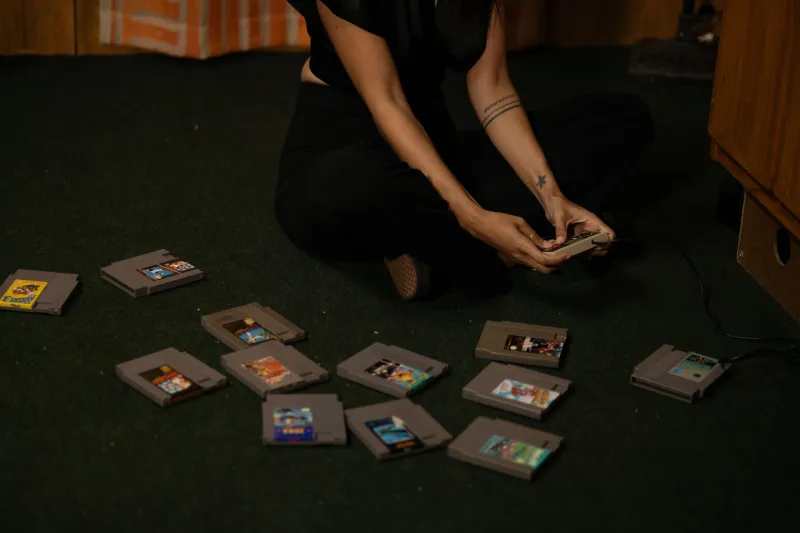
With retro gaming enjoying a full-blown renaissance right now — shoutout to every American who's spent 2024 hunting down PS2 collections at garage sales — it feels like the right time to actually sit down and evaluate what those forgotten entries brought to the table. Some of them are genuinely underrated. Some of them are historical curiosities at best. And a couple of them are just flat-out strange.
Let's break it all down.
Onimusha Tactics (GBA, 2003)
This one tends to get written off immediately because it's a tactics game on a handheld, and the Onimusha brand is so closely tied to real-time combat that the genre shift feels jarring before you even boot it up. But give it a fair shot and you'll find something surprisingly solid.
Developed by Capcom and released in North America in 2003, Onimusha Tactics transplants the franchise's demon-vs-samurai conflict into a grid-based strategy format that owes a clear debt to Final Fantasy Tactics. You're managing a small squad of fighters across turn-based battlefields, absorbing enemy souls, and building out your team through a familiar upgrade loop.
What works here is the atmosphere. The sprite art is genuinely beautiful for a GBA title, and the story — which follows a new protagonist named Onimaru — does a decent job of feeling like it belongs in the same world as the main games. The soul absorption mechanic translates reasonably well to the strategy format, giving battles a resource-management layer that keeps things from getting stale.
What doesn't work is the difficulty balancing. Early missions are almost insultingly easy, and then the game hits a wall somewhere around the midpoint that feels less like a challenge and more like a demand for grinding. For a portable tactics game in 2003, that was maybe acceptable. In 2024, it's a friction point.
Verdict: Worth playing if you're a tactics fan who wants more Onimusha lore. Emulation makes it more accessible than ever, and it runs cleanly on most GBA emulators. Just budget some patience for the grind.
Oni: Dawn of Dreams Spin-off Content and the Blade Warriors Experiment
Before we get into the truly deep cuts, it's worth acknowledging Onimusha Blade Warriors — a 2004 PS2 arena fighter that Capcom released with almost zero fanfare in the US market. It's essentially a mascot brawler using the Onimusha roster, closer in spirit to something like Power Stone than anything in the main series.
Honestly? It's a mess. The combat lacks the precision that makes the mainline games satisfying, the roster feels thin, and the whole thing has the energy of a product that was rushed to fill a release window. It's not without charm — seeing characters from across the series share a stage is fun for about twenty minutes — but there's not much underneath that novelty.
Verdict: A curiosity, not a recommendation. Worth booting up once if you've got a PS2 and a friend willing to laugh through it with you. Don't go out of your way.
The Mobile Titles: A Complicated Legacy
Capcom released several Onimusha-branded mobile games throughout the mid-2000s, primarily targeting Japanese feature phone platforms before smartphones existed in their current form. These are the hardest entries to evaluate fairly because most Western players simply never had access to them, and the majority are now effectively gone — lost to platform shutdowns and the general graveyard of early mobile gaming.
What's been documented about titles like Onimusha Soul — a browser and mobile card-based game that ran from 2012 to 2015 in Japan — suggests Capcom was genuinely trying to keep the franchise alive in a transitional period when the console entries had gone quiet. Onimusha Soul reportedly had a decent story mode and introduced new characters that expanded the lore in interesting directions. Whether those directions were actually good is hard to say definitively, since localized coverage was minimal.
The honest answer here is that these titles exist more as historical footnotes than playable experiences in 2024. If you're a serious franchise historian, they're worth researching. If you're a fan looking for your next Onimusha fix, they're essentially inaccessible.
Verdict: Historically interesting, practically irrelevant for most modern players. The mobile era represents a chapter of the franchise that time has largely sealed shut.
What the Side Games Actually Tell Us About Onimusha
Looking at these releases together, a pattern emerges that's pretty common in gaming history. When a franchise is at its commercial peak, publishers tend to greenlight experiments — tactics games, arena fighters, mobile ports — that probably wouldn't get approved otherwise. Some of those experiments are genuinely worthwhile. Most of them are not.
For Onimusha, the spin-off catalog is a mixed bag that leans toward the forgettable end of the spectrum. Tactics is the clear standout, a game that actually tried to do something interesting with the source material rather than just slap the brand on a different genre skeleton. The rest range from harmless diversions to genuine low points.
But here's the thing — even the weaker entries contribute something to the franchise's overall picture. They show a Capcom that was actively trying to figure out how far the Onimusha name could stretch, and that kind of creative restlessness is part of why the mainline games felt as focused and confident as they did. The experiments happened so the core series didn't have to.
The Takeaway for 2024 Players
If you're working your way through everything Onimusha has ever produced, here's the honest priority list: play the four mainline entries first, full stop. Then, if you want more, Onimusha Tactics on GBA is a legitimate good time for strategy fans. Everything else is optional at best.
The franchise's legacy lives in those main games, and no amount of spin-off archaeology changes that. But knowing the full catalog exists — knowing that Capcom kept building out this world even in formats that didn't quite fit — makes the whole thing feel a little richer. These games are the footnotes that help you understand the story.