Before the Purchase: How PS2 Demo Discs Sold a Generation on Onimusha
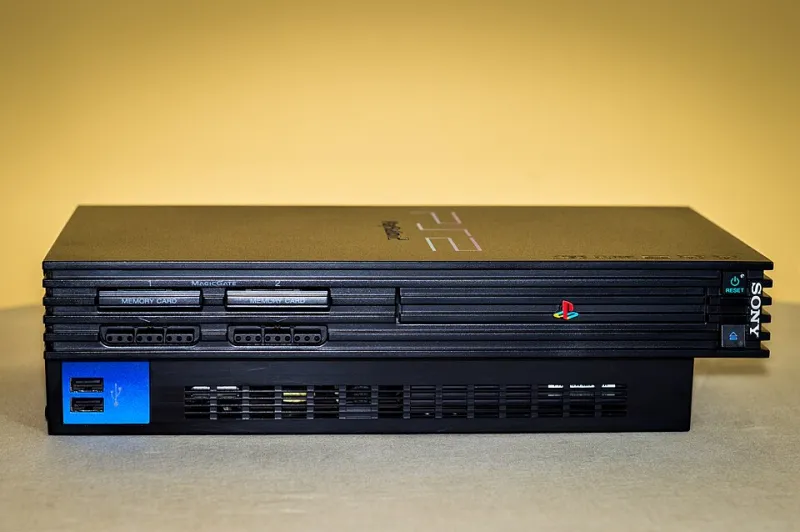
Photo: Deni Williams from São Paulo, Brasil / Brazil, CC BY 2.0, via Wikimedia Commons
Onimusha did not arrive in the US as a sure thing. It came in 2001 as a new Capcom action game with a samurai, a demon army, and a combat loop that asked players to absorb glowing souls from fallen enemies. That is a strong pitch now. Back then, it needed a handshake.
For a lot of American players, that handshake was not a television ad or a magazine cover. It was a demo disc.
The Disc That Came in the Mail
If you were a certain kind of PlayStation kid, the arrival of a demo disc was an event. Maybe it came polybagged with a magazine. Maybe it was a pack-in from a preorder. Maybe it was one of those Official U.S. PlayStation Magazine discs that piled up next to the console like loose change. The packaging was thin, the menu music was often strange, and the value was enormous.
Onimusha fit that format perfectly. A demo didn't need to explain the whole castle. It needed one corridor, one enemy encounter, one taste of the soul-absorbing loop, and a cliffhanger strong enough to make you bug your parents for a rental.
The best demo discs did not feel like advertisements. They felt like secret doors. You put in a disc for one game and found a trailer for another. You pressed play on a slice that lasted fifteen minutes and spent the next week thinking about it during math class.
A Very Specific Kind of Cliffhanger
Onimusha's appeal in a demo was not just the setting. It was the texture. The pre-rendered backgrounds looked like paintings you could walk through. The fixed camera framed fights like horror scenes. The sound of steel hitting demon bone was crunchy and immediate. And the soul absorption gave every kill a second beat: fight, then collect, then decide what to do with the power.
A short demo could communicate all of that without a tutorial essay. You did not need to know the full story of Samanosuke and the Genma. You needed to feel the pause before a strike and the little rush of pulling souls out of the air. That was enough to make a kid in Ohio or Texas or suburban California start scanning the Electronics Boutique shelves.
Kiosk Encounters and Rental Night
Not everyone had the magazine disc. Some players met Onimusha at a kiosk in a Best Buy or a GameStop, standing under fluorescent lights with a plastic controller that had seen things. Others found it at Blockbuster on a Friday night, sandwiched between a wrestling game and a movie tie-in.
That is a very specific memory for a very specific generation: the rental aisle as discovery engine. You had two nights, maybe three, and a game had to prove itself fast. Onimusha was good at that. The opening hour had mood, momentum, and a clear promise of more demons around the next corner. A demo could plant the idea. A rental could seal it.
Why a Slice Was Enough
Modern marketing often tries to show everything. Demo discs had the opposite job. They showed you a sliver and trusted the sliver to do the work. For Onimusha, that sliver was a perfect fit because the game's identity was so concentrated. The combat was unusual but readable. The atmosphere was strong without requiring a lore dump. The setting stood out in a market full of space marines and racing games.
And there was the social part. Demo discs got passed around. A friend brought one over. You brought one to a cousin's house. You talked about the game before it was out, which meant you were already invested before the review scores landed. That kind of word-of-mouth was slower than a social feed, but it stuck.
The Gateway Still Works
In 2026, it is easy to find Onimusha with a search bar. The remasters are a click away. Trailers autoplay. Recommendations arrive in rows. That is convenient, but it is not the same as the demo-disc era, when discovery felt like a small physical ritual.
Still, the lesson holds. Onimusha has always been a series that makes sense once you hold the controller. A screenshot can show you a samurai. A demo shows you the timing. That is why so many longtime fans trace their attachment back to a scratched disc in a paper sleeve, a kiosk with a sticky controller, or a rental case they did not want to return.
The demo was not the whole game. It was the doorway. And for a generation of US players, that was more than enough.