Locked Doors, Looping Hallways, and the Art of Paying Attention
There's a particular kind of anxiety that only shows up in a hallway you've already cleared. You've been through it twice. You know the door at the end leads back to the courtyard. And still, when the music drops out and something scrapes across the floorboards behind you, your shoulders climb toward your ears.
That feeling is not an accident. It's the product of level design doing quiet, unglamorous work — and it's the thing I miss most when I load up a big-budget action game in 2026 and get a glowing arrow pointing at my next objective.
The Castle Was Never Just a Backdrop
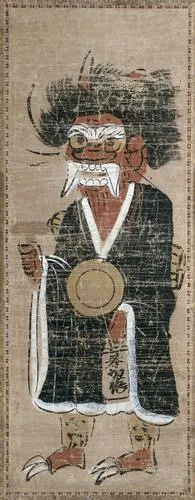
Onimusha: Warlords drops Samanosuke into Inabayama Castle and then refuses to hold his hand. The rooms are small. The camera is fixed. Sightlines are deliberately chopped up by pillars, screens, and stairwells, which means you're constantly rebuilding your mental picture of the space from fragments.
That's the whole trick. You can't see the room you're in, let alone the one next door, so the game forces you to remember it. Where the door was. Which corner the Genma came from. Which staircase led up and which one looped you back into the same hallway you swore you'd already left.
Twenty-five years later, that's still a more demanding ask than most games make of us.
Locked Doors Are a Language
Every key in Onimusha is a sentence fragment. You find a crest, you remember a door, you connect the two. No quest log entry spells it out. No marker pulses on your HUD. The map screen gives you geometry and nothing else — no objectives, no icons, just the shape of the place you're slowly learning to hold in your head.
What that builds is a specific skill: reading space as information. The same way you learn to read an enemy's wind-up animation, you learn to read a corridor's dead end or a suspiciously empty alcove. Both are tells. Both reward the player who's actually paying attention instead of the one who's chasing the next icon.
Reading a Room vs. Following an Arrow
I don't want to be the guy shaking his fist at modern games. Plenty of 2026 releases do genuinely interesting things with space. But there's a real pattern in big action titles right now: the minimap does the remembering, the waypoint does the deciding, and the environment becomes wallpaper between cutscenes.
Even the debate about conspicuously painted ledges and glowing handholds is really a debate about this. When a game doesn't trust you to look at a wall and figure out it's climbable, it has quietly decided that the wall isn't worth looking at.
Onimusha never had that problem, because it had no choice. The hardware couldn't render a giant seamless world, so the designers built tension into density instead. Compact rooms. Hard corners. A fixed camera that turned every new screen into a small act of discovery. Restrictions became the aesthetic.
Tension Is a Floor Plan Problem
Here's the part people forget when they file Onimusha under nostalgia: the scares, such as they are, come from architecture. A narrow stairwell means you can't dodge laterally. A long hall means you see the enemy coming and have nowhere to go. A room with one exit means a fight has consequences beyond your health bar.
You can't get that from a wide-open field with a fast travel point at each end. Tension requires compression. Onimusha's castle is essentially one long, elegant squeeze.
What a Modern Onimusha Should Keep (and What It Should Break)
With a new entry finally on the horizon, this is the conversation worth having. Not whether the series should modernize — of course it should — but what it should refuse to sand off.
Keep the compression. Modern third-person cameras are fine, but a game that lets you see everything at once loses the specific dread of not knowing what's around the corner. Some rooms should still be tight enough to feel rude.
Keep the door-to-door rhythm. Onimusha's real pacing unit isn't the chapter or the boss fight. It's the next door. There's always one more, and it's always slightly more interesting than the last.
Break the backtracking without breaking the memory. Endless retreads of the same hallway are a chore in 2026 in a way they weren't in 2001. Shortcuts, one-way drops, and shortcuts that pay off the mental map are the fix — the map still matters, but the walk gets shorter.
Trust the player again. No objective markers inside the castle. No lit path. If someone gets stuck, let them get stuck for six minutes. That frustration is where the ownership lives.
The Lesson Nobody Put on a Poster
Onimusha's level design never got the credit its combat did, which is strange, because the two are the same discipline wearing different clothes. Combat teaches you to read a demon. The castle teaches you to read a room. Both require you to slow down, look, and commit.
That's not a retro curiosity. That's a design principle. And any studio building an action game in 2026 could do worse than to lock a door, take away the map marker, and see what happens.