Let the Demons Talk: The Case for an Onimusha Game Told From the Wrong Side of the Blade
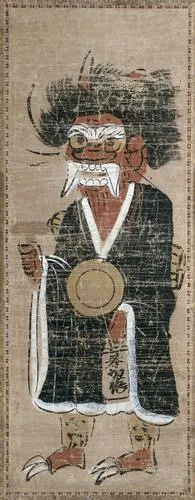
Photo: Unknown authorUnknown author, Public domain, via Wikimedia Commons
Every Onimusha game asks the same question in a slightly different accent: what does it cost a person to fight a monster? It's a good question. It's also one we've now asked five times, with a sixth on the way.
Meanwhile, the monsters have been standing in the corner of the room for a quarter century, waiting for someone to ask them anything at all.
I think it's time.
The Lore Is Already Sitting There, Unused
The Onimusha series has never been shy about giving its demons a hierarchy. Fortinbras, Guildenstern, Marcellus — the Genma leadership is a court, complete with scheming, hierarchy, and ambition. Onimusha 2 gave us Gogandantess, a demon lord with a knight's code and an ego the size of a castle wall, and he's still more memorable than half the human protagonists in the genre.
That's not incidental. That's a franchise telling you it has a second story it hasn't told yet.
The games already hint at internal politics among the Genma, at factions, at grudges. The Phantom Realm exists as a place, not just a boss arena. Nobunaga's bargain reshaped the demon world as much as the human one. None of this is fan-fiction filler — it's all sitting in the text, waiting for a camera to point at it.
Samanosuke's Blade Has Become a Ceiling
Here's the uncomfortable part. Onimusha's identity is so tightly bound to the samurai-versus-demons fantasy that every new entry has to answer the same question: how do we make this feel like Onimusha?
That's a treadmill. It's why the series has spent years circling the same emotional beats — duty, sacrifice, the cost of the blade. Good beats! But there's a limit to how many times you can have a noble warrior stare at his own gauntlet before it starts to feel like a formula.
A Genma campaign doesn't abandon that identity. It flips the perspective on it, which is a much cheaper and braver move than a reboot.
What It Would Actually Look Like
Combat first, because that's where Onimusha lives. Playing as a Genma should feel heavier, hungrier, and less disciplined than a samurai. Where Samanosuke absorbs souls to grow stronger, a Genma character would devour — a mechanically similar loop with a very different emotional flavor. Fewer tools. More commitment. The kind of combat that makes every swing feel like a decision rather than a combo.
Form-switching is the obvious hook. The Genma are defined by transformation in the franchise's imagination, and building a combat system around shifting between forms would give the spin-off its own identity while keeping the series' love of tactical weapon-swapping intact.
Narratively, you keep it small. One Genma officer, caught between a lord's orders and a war that's starting to look pointless, sent into a human world that fears it on sight. No chosen-one prophecy. No world-ending stakes in the first act. Just a creature discovering that mercy is a liability.
The Risks, Stated Plainly
This could go wrong in several specific ways, and it's worth naming them.
Tonal whiplash. Onimusha is pulpy and a little silly at its best. A Genma story that takes itself too seriously and goes full grimdark would feel like a different franchise wearing the armor.
Sympathy overload. The moment you start explaining away every demon's crimes, the human protagonists of the old games look like fools. The Genma should be understandable, not exonerated.
Gameplay drift. If the demon campaign turns into a generic dark-fantasy power trip, you've built a spin-off with no reason to be an Onimusha game. The soul economy has to stay. The fixed-camera heritage — or at least its claustrophobia — has to stay.
The canon problem. Set it in a period the mainline games haven't touched, keep the cameos restrained, and let it stand on its own feet. Nobody wants a spin-off that exists only to wave at the main series.
Why Now, Specifically
We're in a moment where the franchise is being reintroduced to an audience that mostly wasn't there the first time. That's a rare window. The safe move is another samurai, another castle, another gauntlet. The interesting move is to widen the world while the audience is still forming its idea of what Onimusha is.
And there's a practical argument too. A tighter, shorter, more experimental Genma campaign is the kind of project that doesn't need to carry the weight of a full mainline sequel. Lower stakes, higher risk tolerance, a chance to try something genuinely strange under a name people trust.
The Wrong Side of the Blade
Onimusha's best trick has always been making you feel small against something enormous — a warlord, a fortress, a demon lord with a theater-kid ego. Imagine pointing that feeling inward. Imagine being the enormous thing, and discovering that the small thing in front of you is more complicated than you were told.
That's not a betrayal of the series. That's the series finally using everything it built.