Paper Souls: Why Onimusha's Instruction Manuals Deserve a Place in the Archive

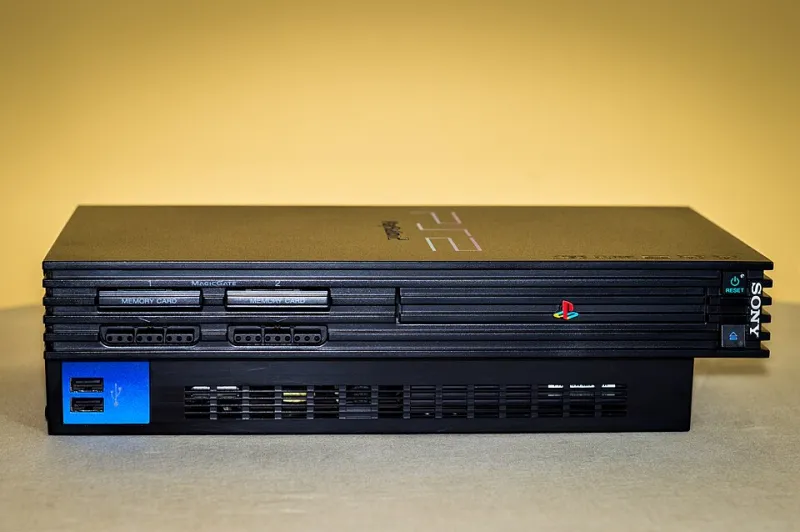
Photo: Juliadxb, CC BY-SA 4.0, via Wikimedia Commons
There is a particular smell to an old PlayStation 2 manual. Ink, glossy paper, a little dust from the shelf. If you grew up with physical games, that smell is a time machine. If you are collecting Onimusha in 2026, it is also a reminder that some of the most interesting series lore never appeared on screen at all.
Onimusha's instruction manuals are not just setup guides. They are little paper companions. They explain the soul orb system, introduce characters, sketch enemy types, and occasionally make localization choices that quietly shape how American players read the story. For a franchise so concerned with demons, honor, and hidden power, the manual was often the first place that world became legible.
More Than a Control Diagram
A modern player might open a manual, see the controller layout, and close it. Fair enough. But PS2-era manuals had to do more work. Games could not rely on endless tutorial pop-ups or a wiki. The manual was part of the design. It told you what buttons did, sure, but it also told you what the game wanted you to care about.
In Onimusha, that meant explaining the Oni Gauntlet, soul absorption, weapon upgrading, and the difference between the colored souls. It meant giving you a map legend before you got lost in a castle. It meant a cast page with portraits and names so you did not spend the first hour confusing one armored noble with another.
Those pages were not filler. They were the manual equivalent of a good opening act.
What Was Actually in There
Different Onimusha manuals emphasized different things, but the pattern is familiar. You get a story setup, a character roster, a control breakdown, item descriptions, and often a bestiary or enemy guide. Some manuals include maps, charts for weapon upgrades, or notes on the gift system in Onimusha 2. The layout is dense in that early-2000s way, with small type and boxes everywhere.
For collectors, the details matter. The paper stock. The fold-out inserts. The registration card. The occasional safety warning that feels like a relic of another era. A complete copy of a PS2 game is not just a disc and a case; it is the whole package, including the paper that most people threw away.
That is the sad part. Manuals were disposable by design. Kids left them on the floor. Rental copies lost them. Game stores separated discs from cases. Decades later, the games survive in greater numbers than the manuals do.
Localization on Paper
The manual is also a translation artifact. US players met Onimusha through English text, and the manual was often the first extended dose of that voice. Character names, place names, and terminology had to be explained in a way that made sense to an audience that might not know the historical figures being fictionalized.
Those choices are worth studying. How did the manual describe the Genma? How did it frame the historical backdrop? Did it explain terms like Oni or just assume you would pick them up? The answers tell us something about how Capcom wanted American players to understand the series in the early 2000s.
That is why scans matter. A manual is not just a collectible. It is a record of how a game was presented, packaged, and translated for a specific market.
The Collector's Case for Manuals
If you are building an Onimusha collection in 2026, do not treat manuals as an afterthought. A disc-only copy is playable, but a complete copy tells a fuller story. Check for inserts. Compare regional variants. Look at the condition of the spine and the corners. A manual with a crease is still a manual, but a clean copy is a small piece of preservation.
This does not mean every collector needs to chase sealed copies. That is a different hobby with a different budget. The point is simpler: when you find a manual, keep it with the game. Do not toss it in a drawer. Do not let it become the thing you forgot to check when you bought a used copy online.
How to Preserve the Paper Trail
The practical steps are not glamorous. Store manuals flat or upright in a dry space, away from sunlight and heat. Avoid tape repairs. If you scan a manual, use a flatbed scanner at a reasonable resolution, keep the pages in order, and include the cover, back cover, and any inserts. Share scans with community archives and note the region, edition, and condition.
Do not watermark the history. Do not gatekeep the pages. The goal is access, not ownership of the only copy.
What We Owe the Paper Trail
Onimusha is a series about absorbing souls and carrying power forward. There is something fitting about treating its manuals the same way. They are small, fragile, and easy to lose. They also hold a version of the games that cannot be patched back in.
In 2026, with remasters making the games easier to play than ever, the paper is what reminds us how they first arrived. Keep the discs. Keep the cases. Keep the manuals. Scan them, talk about them, and pass them on. The demons can wait. The paper will not.