Fixed Cameras, Finite Herbs: The Resident Evil Skeleton Inside Onimusha
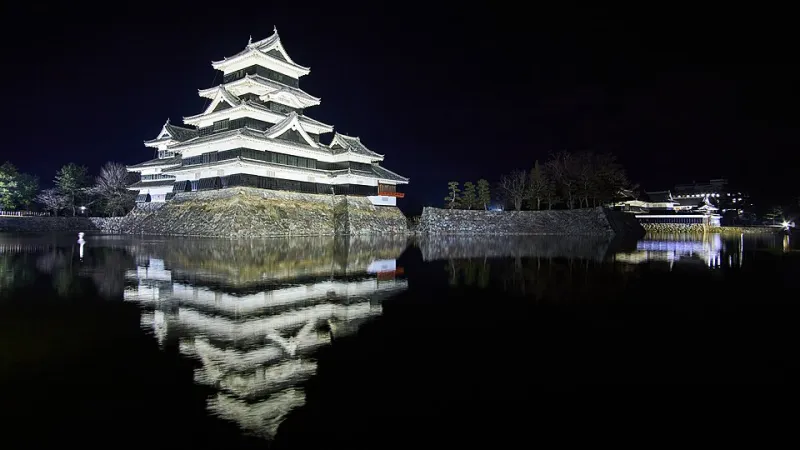
Photo: Radek Kucharski from Warsaw, Poland, CC BY 2.0, via Wikimedia Commons
Every few months someone on a message board asks the question that starts a small war: is Onimusha a horror series? The demons suggest yes. The power fantasy suggests no. But the real answer is buried in the design, and it is not subtle. Onimusha was built by people who had just spent the 1990s scaring the daylights out of players with Resident Evil, and they did not throw that toolbox away when they handed the hero a katana.
It Began as Resident Evil in a Kimono
The project that became Onimusha: Warlords started life inside Capcom as something close to a genre transplant. Early on, the pitch was essentially a Resident Evil game relocated to Japan's Warring States period, complete with a ninja lead and a haunted-castle mood. The nickname that has followed the prototype around for years is Sengoku Biohazard, and it tells you everything about the ambition: same fear economy, different weapon.
Swapping a pistol for a sword was never cosmetic. It rewired the entire emotional relationship with space. In Resident Evil you are afraid of what is down the hall. In a sword game you have to walk down the hall and get within arm's reach of it. Capcom figured that out during prototyping, and instead of sanding the tension away, the team leaned in. What shipped in 2001 was a survival horror game wearing samurai armor.
Three Horror Habits the Series Never Kicked
Watch ten minutes of the original and the inherited DNA is obvious.
The camera. Pre-rendered backgrounds and fixed angles, cut together like a film the game is editing without your permission. Every camera change is a small act of violence against your sense of direction, and every one is also a fresh opportunity for something to be standing in the new frame.
Scarcity. Healing is finite. Souls are a resource you have to actively harvest, which means standing still in a room full of demons instead of bolting for the door. Save points are decisions rather than conveniences.
Tempo. Rooms are puzzles with a rhythm, and the game expects you to learn them. That deliberate, unhurried pacing is something modern action games have almost entirely abandoned.
None of those traits were mandatory in 2001. Plenty of action games were fast, generous, and forgiving. Onimusha chose to be stingy, because stingy is what makes a sword feel heavy.
The Reward That Punishes You
Here is the most survival-horror idea in the whole franchise: soul absorption. Kill a demon and it bursts into drifting motes. You need those motes to feed your weapons and magic. So you plant your feet in the middle of the fight, hold a button, and collect while the next wave closes in.
That is a horror beat disguised as a reward loop. The game hands you a cookie and then dares you to eat it while the room fills with teeth. Later entries expanded the system, but the original's version is the purest expression of the concept: the resource you need most requires you to stop moving in the exact spot where stopping is most dangerous.
Add the sound design and the effect is complete. The Genma announce themselves. Chain rattles. Wet breathing. A shriek that pitches upward right before the lunge. Play the 2019 remaster with the lights off and it still functions as a haunted house.
Why Resident Evil Fans Clicked So Fast
When Warlords landed in the States in March 2001, it arrived at a moment when a lot of us had just finished mainlining Resident Evil and were hungry for the next fix. Code Veronica had reminded everyone what the formula could do. Onimusha offered that formula's muscle memory with a new vocabulary: familiar camera language, familiar item anxiety, and a melee system that turned every corridor into the half-second before a zombie lunges.
The rental economy did the rest. Onimusha was a six-to-eight hour game, which in the Blockbuster era meant you could plausibly finish it in a weekend and then tell everyone at school about it on Monday. It was short in the way horror games were short, and that brevity made it shareable. You did not need forty hours. You needed one Friday night and a friend who had not seen the Marcellus fight yet.
That is the irony worth naming. Onimusha gets remembered today as a stylish action series, the ancestor of a dozen modern samurai games. But the first entry won over American players by speaking zombie-game language: careful resource math, rigid framing, and the constant low hum of something waiting in the next room.
The Dread That Stayed
You can trace the horror roots forward through the sequels. Onimusha 2 widened the world and added allies, but it kept the deliberate tempo and the sense that every healing item was a loan against the future. Onimusha 3 opens in Paris like a monster movie cold open with a time-bending hook. Dawn of Dreams loosens the collar considerably, and you can feel the series relaxing into pure action.
Go back to the first game, though, and the tension holds up in 2026. Not because the textures are spooky, but because the design refuses to let you feel safe. The camera hides things. The healing is limited. The souls you need are lying on the floor next to something that wants to eat you.
That is not nostalgia talking. That is architecture. Onimusha never stopped being Resident Evil with a sword. It just learned how to swing.