Hard But Fair: The Forgotten Genius Behind Onimusha's Difficulty Design

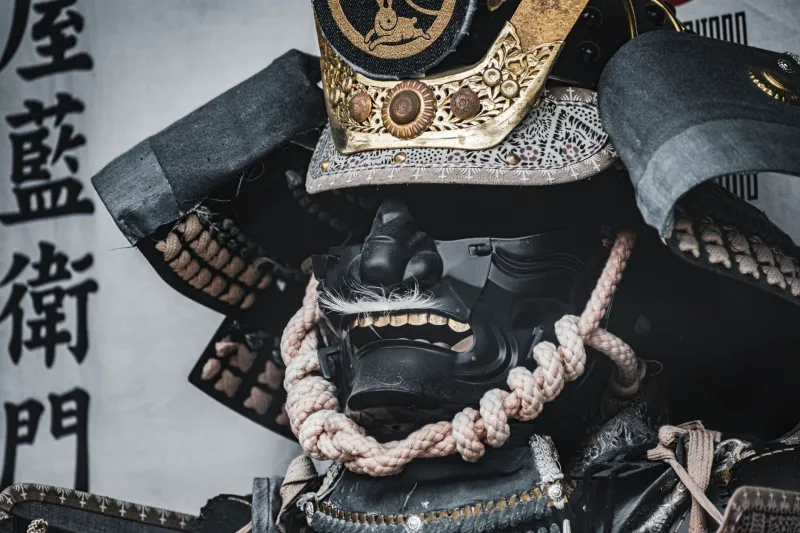
Photo by Photo by Karthik B K on Unsplash on Unsplash
There's a phrase that gets thrown around a lot in gaming circles these days: punishing but fair. It's basically the unofficial tagline for the Soulsborne genre, and honestly, it's earned. Dark Souls, Elden Ring, Sekiro — these games built their entire identities around making you suffer in a deliberate, almost respectful way. But here's the thing: Onimusha was threading that same needle back in 2001, and it did it without making you feel like the game hated you.
That distinction matters more than it sounds.
The Pressure Without the Punishment
The first thing you notice when you revisit the original Onimusha: Warlords is how immediately tense it feels. Samanosuke moves with purpose, enemies hit hard, and resources aren't exactly falling out of the sky. You're not invincible. You can absolutely die to a basic grunt if you get sloppy. But the game never feels like it's stacking the deck against you.
A lot of that comes down to enemy encounter design. Rather than throwing waves of identical fodder at you, early Onimusha stages introduce enemies in small, manageable groups — almost like the game is teaching you the rules before it starts testing them. You learn that the Genma foot soldiers have readable attack patterns. You learn that timing your absorption window after a kill is just as important as the kill itself. None of this is spelled out in a lengthy tutorial. It's baked into the moment-to-moment flow.
Compare that to some modern action games that drop you into chaos and let the retry screen do the teaching. Onimusha trusted you to observe and adapt. That's a subtle but meaningful difference.
Checkpoints That Actually Made Sense
One of the most underappreciated aspects of Onimusha's design is its save system. Yeah, the ink ribbons were a holdover from Resident Evil's survival horror DNA — limited saves, deliberate placement, a little bit of tension baked into every trip to a save mirror. But unlike the early RE games, Onimusha never felt cruel about it.
The save points were spaced in ways that respected your time. Boss arenas were almost always within reasonable distance of a mirror. Difficult sections had natural breathing room before and after them. The game wasn't trying to erase your progress maliciously; it was creating a structure where every save felt earned without feeling arbitrary.
There's real craft in that balance. Too many checkpoints and the stakes evaporate. Too few and frustration replaces engagement. Onimusha sat comfortably in the middle, which is harder to achieve than it looks.
Adaptive Pressure Through Enemy Variety
As the series evolved — from Warlords to Samurai's Destiny to Demon Siege — the difficulty scaling got more sophisticated. Later entries introduced enemies with elemental affinities, attack patterns that demanded specific weapon matchups, and mini-boss encounters that showed up mid-dungeon without warning. These weren't just difficulty spikes. They were pop quizzes on everything the game had been teaching you.
The Genma Onimusha variant that appeared in the remastered Warlords release even tweaked enemy aggression and density in ways that kept veteran players on their toes without completely alienating newcomers. It's a light touch, but it shows that the series understood difficulty as a spectrum rather than a single dial.
Meanwhile, the magic system added a layer of strategic flexibility that softened the sharpest edges of the challenge. Struggling with a particular enemy type? You probably had an elemental spell that covered your weakness. The game gave you tools and trusted you to use them — rather than withholding options until you "earned" them through repeated deaths.
Accessibility Without Hand-Holding
Here's where Onimusha quietly pulled off something that a lot of modern studios still fumble: it was accessible without being condescending. You didn't have to be a genre veteran to finish the game. Casual players could lean on healing items, take fights slowly, and still reach the credits. But if you wanted to push yourself — absorbing every soul orb at maximum efficiency, mastering the issen counter-kills, finishing runs with minimal resources — the depth was absolutely there.
That dual-layer design is genuinely rare. Most games either lean too casual (making the challenge feel hollow) or too hardcore (building a wall that keeps out anyone who isn't already invested). Onimusha found a middle path that welcomed everyone and rewarded mastery without demanding it.
What Modern Games Should Be Taking Notes On
The current conversation around difficulty in gaming is almost entirely defined by the Soulsborne model and the ongoing debate about whether those games should have easy modes. That's a valid discussion. But it sometimes obscures the fact that there were other approaches to challenge design that worked beautifully — approaches that didn't require players to accept a certain level of punishment as the price of admission.
Onimusha's model was built on clarity, pacing, and respect for the player's time. It created tension through smart enemy design and resource management rather than through sheer attrition. It rewarded skill without gatekeeping progress behind it.
For a franchise that's been quiet for nearly two decades, that design legacy is remarkably loud. And for any studio building an action game right now, it's worth listening to.