Nightmare Fuel, Ranked: Onimusha's Bosses by How Badly They Would Ruin You in Real Life
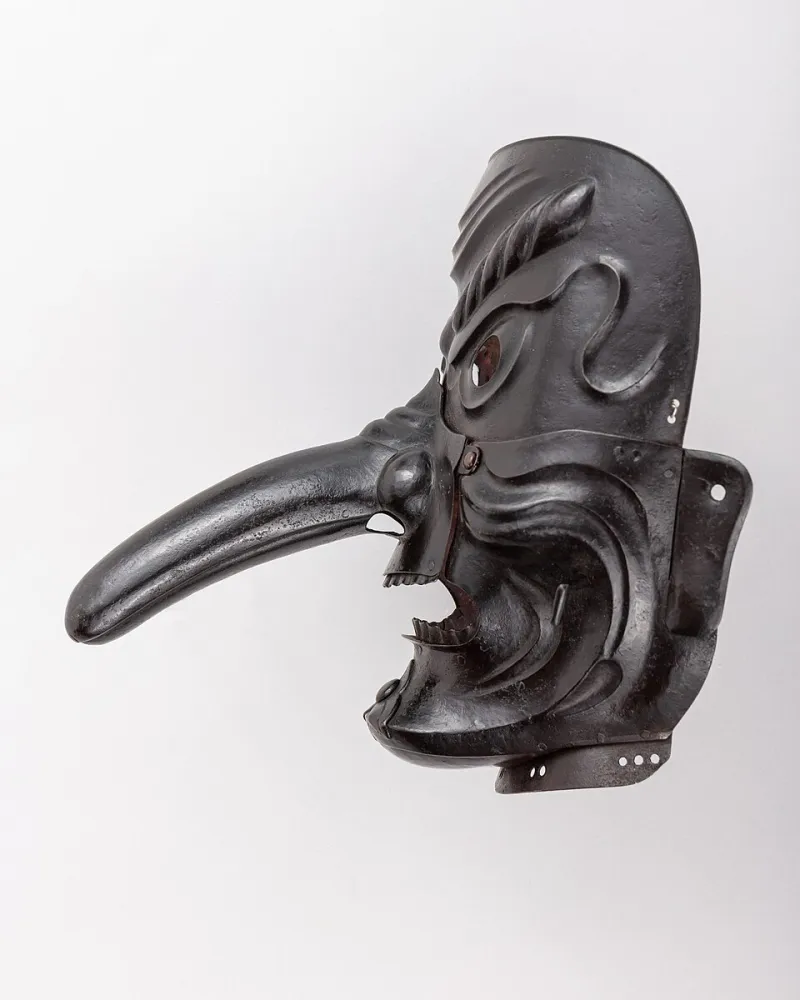
Photo: Unknown, CC0, via Wikimedia Commons
Every boss ranking on the internet measures the same thing: difficulty. How many tries, how many deaths, how many controllers launched into a beanbag chair. This list does not care about any of that. This list asks one question and one question only. If this creature stepped out of your hallway at 2 a.m., how much of the rest of your life would be spent thinking about it?
Ranked from least to most horrifying, here is the nightmare ledger.
7. Gogandantess
Yes, technically a boss. Also technically the least frightening thing in this franchise, and that is precisely what makes him worth starting with. Onimusha 2's four-armed showboat treats every duel as a chance to hear himself talk. He is theatrical, chatty, and clearly having the best day of his life while you sweat through your last healing item.
Real-world terror: low. Real-world inconvenience: catastrophic. This is the boss who would ruin you socially. He would follow you to a dinner party and announce your defeat to the room.
6. Osric
The armored duelist is a reminder that Onimusha's Genma upper crust were designed to look like heraldry that came alive and started swinging. He reads as less monster and more knight, which is exactly why he lands here. In a hallway, you would hear the footsteps first, and they would be perfectly measured.
That is a specific kind of dread, and it is the quiet kind: not a beast, but a professional. He would not be hungry. He would simply be thorough.
5. Gargant
Scale is the whole trick with the Onimusha 3 heavy hitter. He does not need a clever gimmick or a tragic backstory. He is a mountain that has opinions about your continued existence, and his voice sounds like a building coming down.
Terror in real life: the specific helplessness of standing near something much larger than you that does not have to hurry. Nothing about him is subtle. Everything about him is final.
4. Marcellus
Here is where the list gets uncomfortable. Marcellus is the hulking brute from the original, and he is terrifying for a boring, relatable reason: he does not stop. Every swing feels like it carries the weight of a parking garage. The arena is small. His weapon covers more of it than yours does.
What earns him this spot is the cruelty of the read. You can see him coming. You can see what he is about to do. You still have to be the person who steps into the arc and does something about it.
3. Guildenstern
Now we get into body horror. The insect nobility of the Genma are where Onimusha's art team was clearly having the most fun, and Guildenstern is the crown jewel: a clinical, patronizing intellect wearing a carapace, treating you less like an enemy and more like a specimen worth cataloguing.
Nothing is scarier than being talked down to by something with too many limbs. He would not kill you dramatically. He would ask a follow-up question first. That is the horror.
2. Fortinbras
The final boss of the original is a theatrical, multi-stage apocalypse, and the reason he ranks this high is the escalation. You do not fight Fortinbras so much as survive his phases. Each form is a bigger idea of what the monster is than the last, and the game is not subtle about the visual language of hell it is painting with.
Real-world terror: moderate in the moment, devastating in memory. He is the thing your brain invents when the hallway light is off and the house is making its settling noises.
1. Nobunaga
The scariest boss in the franchise is the one that looks like a person.
Oda Nobunaga, historically real and fictionally monstrous, is the spine that runs through this series, and no giant Genma can compete with the idea of him. A warlord who traded his humanity for power and got exactly what he asked for. He is not a monster that happens to be ambitious. He is ambition that happened to become a monster.
The Genma at least look like what they are. Nobunaga sits in a room, in clothes, and talks to you. That is the one that would follow you home.
The Art Direction Deserves Better Than This
Half the reason this ranking works at all is that every entry has a silhouette you could sketch from memory. That is not an accident. Early-2000s Capcom monster design leaned on armor, insect anatomy, and religious iconography in a way that looks dated only if you confuse fidelity with craft. The textures are muddy by modern standards. The shapes are not.
Part of the magic is technical. Low-poly models with painted faces land in an uncanny valley nobody was aiming for, and the result reads as genuinely wrong in a way that high-resolution remakes struggle to reproduce. The Genma feel more like folk art than like software.
Why the Chills Still Land in 2026
The modern blockbuster monster is designed to be looked at. It poses. It gets a beauty shot in a cutscene. Onimusha's monsters were designed to be encountered, framed by a fixed camera in a dark room, with a sound cue you would learn to dread.
That sincerity is what still lands. There is no wink, no meta commentary, no ironic distance between you and the thing in the room. If a giant armored demon is coming to kill you, the game treats that as the serious event it is.
Your ballot will differ from mine, and that is the point. Put Gargant at one, put Fortinbras at seven, argue about it for an hour. Just do not tell me the art direction was forgettable.