The Camera That Actually Worked: How Onimusha Solved PS2's Most Notorious Design Problem
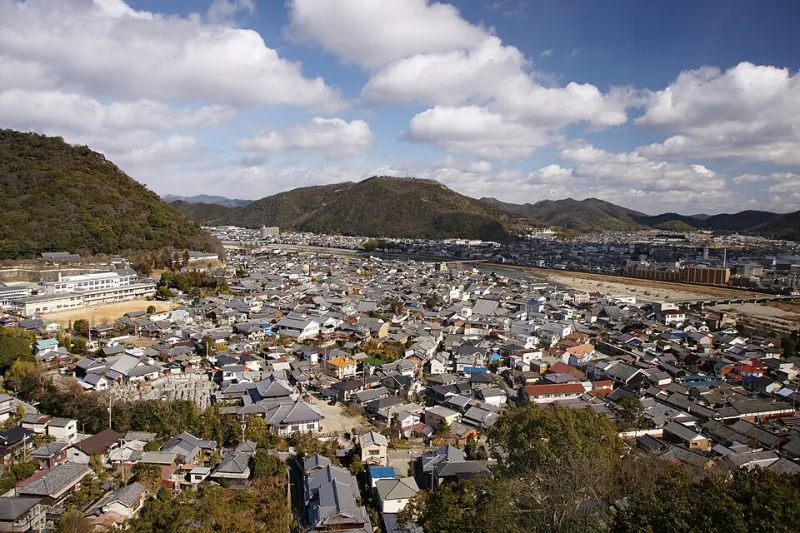
Photo: 663highland, CC BY 2.5, via Wikimedia Commons
If you played a lot of action games on the PS2, you remember the camera problem. Not as an abstract design concept — you remember it viscerally. You remember spinning the right stick while a boss charged you from off-screen. You remember losing track of your character in a cluttered environment because the camera decided to clip through a wall at the worst possible moment. You remember cursing at a game that was genuinely fun except for this one thing that kept reminding you it wasn't quite finished.
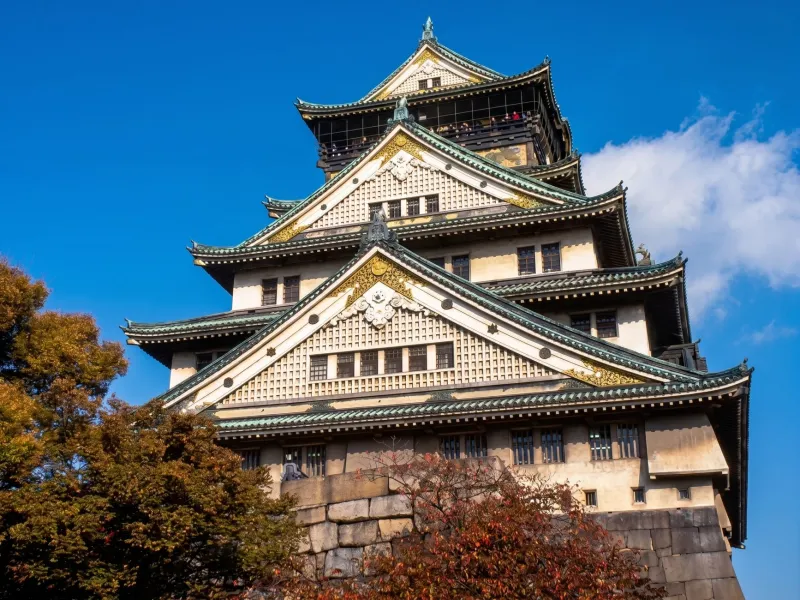
Now think about Onimusha: Warlords. Think about navigating Inabayama Castle, about the way each room felt composed and readable, about the way combat never felt like you were fighting the viewpoint as much as the demons. The camera problem, somehow, just... wasn't there.
That's not an accident. It's a design decision — or more accurately, a cluster of design decisions — that Capcom got right in ways the industry spent years trying to replicate.
The Fixed-Camera Choice Nobody Talks About Anymore
Onimusha used pre-rendered backgrounds with fixed camera angles. In 2024, that sounds like a limitation. In 2001, it was a choice — and it was a choice that came loaded with implications, some good and some genuinely difficult to manage.
The good part is obvious in hindsight: fixed cameras are readable. Every shot is composed by a human being who decided exactly what you should see and how. There's no algorithm trying to find a good angle in real time, no physics system pushing the camera through geometry, no competing priorities between "show the player" and "show the environment." The designer frames the shot, and that's the shot.
What's less obvious is how much work went into making those fixed shots feel natural rather than restrictive. In a lot of fixed-camera games from the same era — early Resident Evil titles being the classic example — the camera could feel confrontational. You'd round a corner and suddenly your controls would invert relative to your previous perspective, a phenomenon that became notorious enough that "tank controls" entered the gaming vocabulary as its own design descriptor.
Onimusha didn't fully escape that legacy, but it softened it in ways that made a real difference in practice.
Solving the Transition Problem
The specific thing Capcom's team got right was camera transitions. Moving between fixed-camera zones is where the whole system lives or dies, and Onimusha handled it with a smoothness that felt almost invisible at the time.
Part of this came down to how the team designed the castle's rooms in relationship to each other. Doorways and corridors were positioned so that consecutive camera angles maintained a consistent sense of spatial direction. When you walked through a door and the camera cut to a new angle, your mental map of the castle didn't need to reset. The new shot picked up where the last one left off in terms of visual orientation.
This sounds simple. It isn't. It requires the environment designers, the camera placement team, and the level layout planners to be working in close coordination throughout production. A single room that breaks the spatial logic of its neighbors can throw off a player's sense of direction for minutes. Onimusha, across an entire castle full of rooms, maintained that coherence almost completely.
The result was navigation that felt intuitive even though you were technically being shown a curated series of still images rather than a continuous three-dimensional space.
Combat Framing as a Design Language
The camera work didn't stop at navigation — it extended into combat in ways that were genuinely sophisticated. Each room's fixed angle was chosen with enemy encounter design in mind. The camera positioned Samanosuke in a way that gave you enough peripheral visibility to read incoming attacks without showing you so much of the room that the space felt empty and unmenacing.
This is a trickier balance than it sounds. Show too little and combat feels claustrophobic and unfair. Show too much and the atmosphere deflates — demons are scarier when you can't quite see all of them at once. Onimusha's camera angles consistently found the sweet spot, keeping encounters readable while preserving tension.
Compare this to contemporaries that used dynamic cameras in their combat encounters. Games like the early iterations of the Devil May Cry series (which, notably, also came from Capcom) experimented with cameras that tried to follow the action dynamically. The results were exciting but inconsistent — sometimes the camera found a great angle, sometimes it found a terrible one, and you never quite knew which you'd get. Onimusha's approach sacrificed that dynamism for reliability, and in a game where split-second combat decisions were the core loop, reliability was worth a lot.
The Atmospheric Dividend
There's one more dimension to this that doesn't get enough credit: the fixed camera made Onimusha's atmosphere dramatically more effective than it would have been otherwise.
Pre-rendered backgrounds allowed for visual detail that real-time 3D environments on PS2 hardware simply couldn't match. Candlelight on stone walls, rain-slicked courtyards, the specific texture of weathered wood in a feudal Japanese interior — these details existed because the backgrounds were essentially paintings rather than polygonal constructions. A dynamic camera would have required all of that to be real-time geometry, and the hardware wasn't there yet.
By committing to fixed cameras, Capcom committed to an art direction that made the world feel genuinely realized in a way that many of its technically more ambitious contemporaries didn't. You weren't just playing in a game space. You were moving through something that looked like a place.
The Lesson That Didn't Quite Land
Here's the frustrating epilogue to all of this: the industry mostly moved away from fixed cameras anyway. By the mid-2000s, fully dynamic 3D cameras had become the default expectation, and the technical problems that had made fixed cameras attractive started getting solved through better camera programming rather than fixed framing.
That's fine. Games evolved. But in the process, something was genuinely lost — a kind of directed, composed visual experience that dynamic cameras have never quite replicated. When you're watching a camera find its own angle, you're watching a system work. When you're looking at a shot that a human being chose, you're watching someone communicate.
Onimusha communicated beautifully. That's worth remembering, even now.