Why Onimusha's Combat Still Hits Harder Than Most Games Released This Year
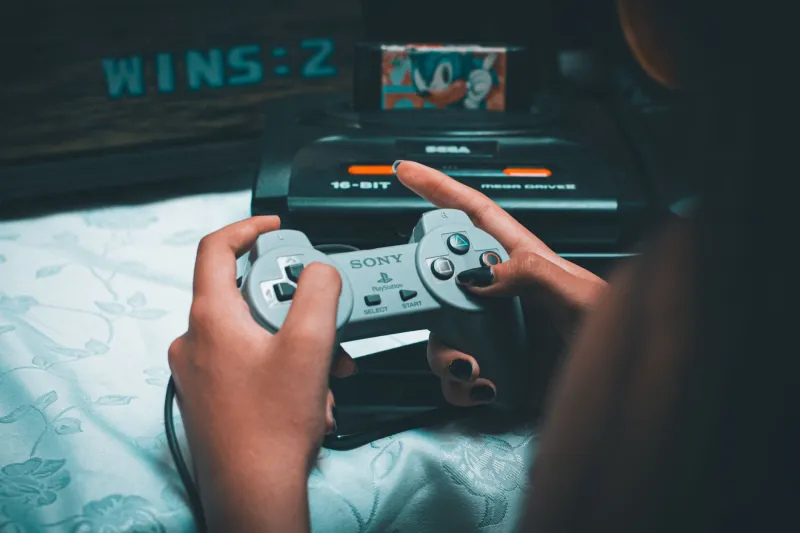
Go ahead and fire up Onimusha Warlords. Not the remaster — though that's fine too — but ideally the original PS2 version if you've still got the hardware. Give it twenty minutes. Fight a few demons. Then jump back to whatever modern action title you've been grinding through lately.
Notice anything?
If you're being honest with yourself, the older game probably felt better. Cleaner. More satisfying per swing. And if that observation bothers you — if it feels like it shouldn't be true — then this breakdown is for you.
The Fixed Camera Wasn't a Limitation. It Was a Choice.
Modern action games default to third-person follow cameras because players expect them. You get full spatial awareness, dynamic angles, and the freedom to look wherever you want. It sounds like an upgrade. In a lot of ways it is.
But Onimusha's fixed camera angles — inherited partly from Resident Evil's pre-rendered background era — did something that free cameras struggle to replicate: they composed combat. Each camera position was essentially a director's cut of the fight you were having. The framing was intentional. The angles were chosen to give you exactly the information you needed, presented in a way that made the action readable at a glance.
When Samanosuke squared off against a group of Genma soldiers in a narrow corridor, the camera wasn't following him — it was staging him. You weren't watching from behind his shoulder. You were watching a fight scene. That distinction matters more than it sounds.
Modern games with free cameras put you in the action but sometimes lose the shape of it. You can end up so deep in the visual chaos that individual exchanges blur together. Onimusha's fixed perspectives kept every encounter legible.
Animation Timing and the Weight of a Swing
Here's where we get a little technical, but stick with it.
Onimusha's attack animations are slow by modern standards. There's meaningful wind-up. There's follow-through. When Samanosuke connects with a demon, there's a brief but perceptible pause — a hitstop — that communicates impact before the enemy reacts. This isn't a performance limitation. It's deliberate design.
Hitstop, for the uninitiated, is the tiny freeze frame that happens at the moment of impact in a well-designed action game. Street Fighter pioneered it. Most great action games use it. But Onimusha's implementation was particularly effective because the rest of the animation timing was already so deliberate. Every swing felt like it had mass behind it.
Contrast this with a lot of modern action titles where attacks chain so quickly — and the camera is moving so dynamically — that individual hits blur into combo strings. The damage numbers pop. The enemy staggers. But do you feel the hit? Often, not really.
Onimusha made you feel every single one.
Limited Enemies, Maximum Presence
This one gets overlooked constantly in retrospectives, so let's give it its due.
Onimusha did not throw hordes at you. Enemy counts in most encounters were small — often two to five opponents in a defined space. This wasn't a hardware limitation (well, not entirely). It was a design choice that gave each enemy meaningful presence.
When you're fighting three Genma soldiers, you can track all three. You know where they are. You're making tactical decisions about which one to engage, when to dodge, when to absorb souls before they disappear. The combat is a puzzle with moving pieces, not a particle system to wade through.
Modern action games, particularly the big-budget Western ones, have developed a troubling habit of equating quantity with intensity. More enemies on screen means more action, right? Not necessarily. More enemies can mean more visual noise, more AI confusion, and a combat experience that rewards button-mashing over actual engagement.
Onimusha's restraint kept the player intellectually present. You couldn't zone out. Every fight required attention.
The Weapon Switch as a Design Philosophy
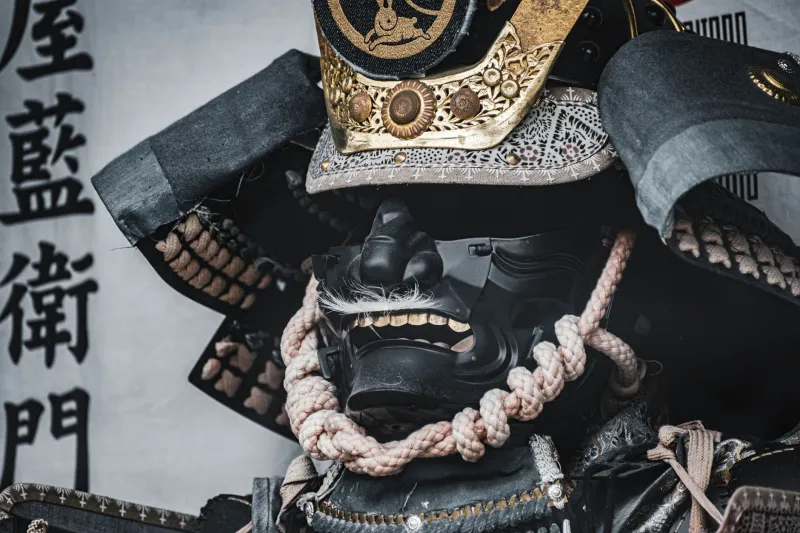
Samanosuke's gauntlet — and the elemental weapon system built around it — forced players to make active decisions mid-combat. Different enemies had elemental weaknesses. Switching weapons wasn't just optimization; it was often survival.
This created a layer of combat depth that modern games frequently try to replicate through complex skill trees and ability menus. But Onimusha's version was elegant because it was immediate. No menus. No cooldowns. Read the enemy, switch the weapon, execute. The feedback loop was tight enough that skilled play felt genuinely expressive.
The modern equivalent — games with elaborate combo systems and dozens of unlockable moves — can achieve similar depth, but they often front-load complexity in ways that delay the satisfaction. Onimusha's system was deep from the first encounter.
What "Visual Noise" Actually Costs
Let's be direct about something: a lot of modern action games are visually exhausting. Screen effects, particle systems, ability animations, environmental destruction, dynamic lighting changes — all of it layered on top of already complex combat. It looks incredible in trailers. In extended play sessions, it can be genuinely fatiguing.
Onimusha's visual language was spare. The environments were detailed but static. Enemies were clearly readable. Your weapon effects were visible but not overwhelming. When something important happened on screen, you saw it.
This isn't an argument against modern game visuals. It's an argument for intentionality. Onimusha's visual restraint served its combat. Every design element was pulling in the same direction.
That coherence is what you're feeling when you pick it up today and think, wait, why does this still work so well?
It works because it was designed to work. Every piece of it. And that kind of intentional design doesn't have an expiration date.