Lightning in a Bottle: Why No Onimusha Sequel Ever Quite Felt Like Coming Home
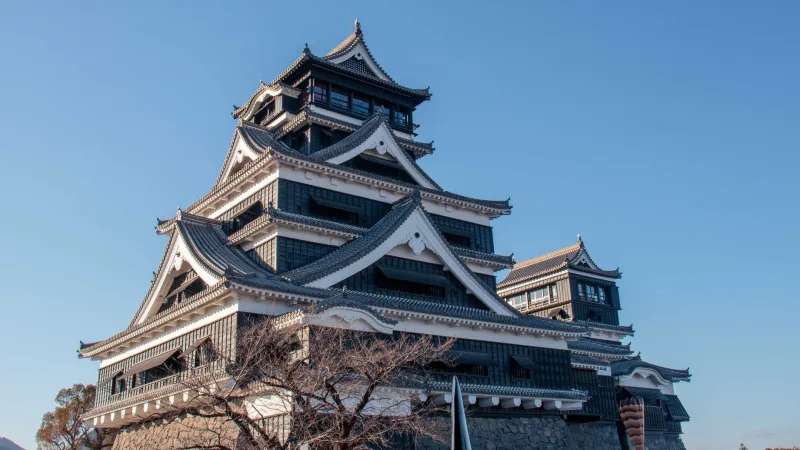
There's a specific kind of gaming nostalgia that doesn't just make you want to replay something — it makes you want to live inside it again. The original Onimusha: Warlords is that game for a lot of us. You remember the first time Samanosuke stepped into Inabayama Castle, the fog rolling in, the demons crawling out of the dark. It felt like nothing else on the PS2 at the time. Sharp, focused, and dripping with atmosphere.
And then the sequels came. And they were... fine. Sometimes more than fine. But none of them quite scratched the same itch in the same way. That's the Onimusha paradox: a franchise that never stopped trying to grow, but somehow kept outrunning the very thing that made it special in the first place.
The First Game Had One Job, and It Nailed It
Let's be clear — Warlords wasn't a complicated game by design. It was tight. Deliberately tight. You had a single protagonist, a contained castle setting, a focused narrative, and a combat system that rewarded timing over button-mashing. The whole thing felt handcrafted in a way that bigger, more ambitious games rarely do.
Part of what made it land so hard in 2001 was the context. Western action games were doing their own thing — broader, more open, often louder. Warlords came in quiet and confident, leaned into feudal Japanese aesthetics, and trusted players to meet it on its own terms. American audiences, who were just starting to really engage with Japanese game design through the PS2 library, responded to that confidence.
That's a tough act to follow. When your first swing is a home run, where do you go from there?
Samurai's Destiny Swung Big and Paid the Price
Onimusha 2: Samurai's Destiny is a genuinely good game, and saying otherwise would be revisionist. But it's also the first example of the franchise blinking. New protagonist, expanded companion system, more open structure — Capcom clearly wanted to signal that this wasn't a one-trick series. And in doing so, they introduced a kind of narrative diffusion that the original never had to deal with.
Jubei Yagyu is a compelling character. The gift-giving mechanic that influenced companion loyalty was clever and surprisingly ahead of its time. But the game's identity felt more scattered. It was trying to be more of everything, and in the process, it became slightly less of the one thing fans had fallen in love with: that singular, suffocating sense of dread and isolation.
This is the trap sequels fall into constantly, and it's not unique to Onimusha. The pressure to justify a follow-up often pushes developers toward expansion rather than refinement. Bigger map, more characters, deeper systems. Sometimes that works. Here, it worked mechanically but not emotionally.
The Third Game Went Hollywood and Lost the Plot
Onimusha 3: Demon Siege is where things get genuinely fascinating from a franchise identity standpoint. Bringing in Jean Reno — yes, that Jean Reno — and splitting the story between feudal Japan and modern-day Paris was either a bold creative swing or a sign that Capcom didn't fully trust the formula anymore. Maybe both.
And look, there's a version of this where it works brilliantly. The time-travel conceit is wild enough to be interesting, and the production values were impressive for the era. But the tonal whiplash was real. Warlords felt like a ghost story told around a campfire. Demon Siege felt like a summer blockbuster. Those aren't incompatible things in theory, but the execution left a lot of longtime fans feeling like the series had traded intimacy for spectacle.
To put it in terms American audiences might recognize: it's the difference between the original Halloween and its later sequels. The first one worked because of restraint. The follow-ups kept adding mythology and scale until the original's quiet terror became almost unrecognizable.
Dawn of Dreams Tried a Reset and Mostly Succeeded — Mostly
By the time Onimusha: Dawn of Dreams arrived in 2006, Capcom seemed to recognize that the franchise needed a genuine pivot rather than another iteration. New cast, new era, a more ensemble-driven approach. In a lot of ways it's the most mechanically polished entry in the series.
But here's the thing about starting fresh: you lose the accumulated emotional weight. Dawn of Dreams didn't have the benefit of years of player investment in its characters. It was asking audiences to care about new faces while the shadow of Samanosuke still loomed large. That's a hard sell, and the game's sales reflected it. It quietly became the end of the mainline series — not with a bang, but with a slow commercial exhale.
Why the "Incomplete" Legacy Actually Keeps Fans Hooked
Here's the argument that might sound counterintuitive: the fact that no sequel fully captured the magic of Warlords is a big part of why this community still exists and still cares.
If Samurai's Destiny had been a perfect follow-up, or if Demon Siege had threaded the needle between spectacle and soul, the franchise might have run its course cleanly and been shelved with a sense of completion. Instead, every entry left something unresolved. A thread that didn't quite get tied off. A version of the series that felt almost right but not quite.
That incompleteness creates longing. And longing is the engine of fandom.
Fans of this series aren't just nostalgic for what Onimusha was — they're holding out for what it could have been, and what it still could be. The sequels, for all their stumbles, never fully extinguished the flame. They just kept reshaping it, sometimes clumsily, sometimes brilliantly, into something that felt like a different kind of promise.
The Paradox Remains, and That's Okay
There's no clean resolution to the Onimusha paradox. The original set a standard that its sequels genuinely struggled to meet, not because the developers lacked talent, but because the original's magic was partly a product of its moment — a specific intersection of platform, cultural appetite, and creative restraint that couldn't be manufactured twice.
What the sequels gave us instead was a record of a franchise trying to find itself, making bold choices, sometimes stumbling, occasionally soaring. That's not a failure. That's a story worth telling.
And honestly? It's part of why we're all still here, still talking about it, still waiting for whatever comes next. The series never gave us a perfect ending. Maybe that's the point.