Pass the Controller: In Defense of Watching Someone Else Play Onimusha
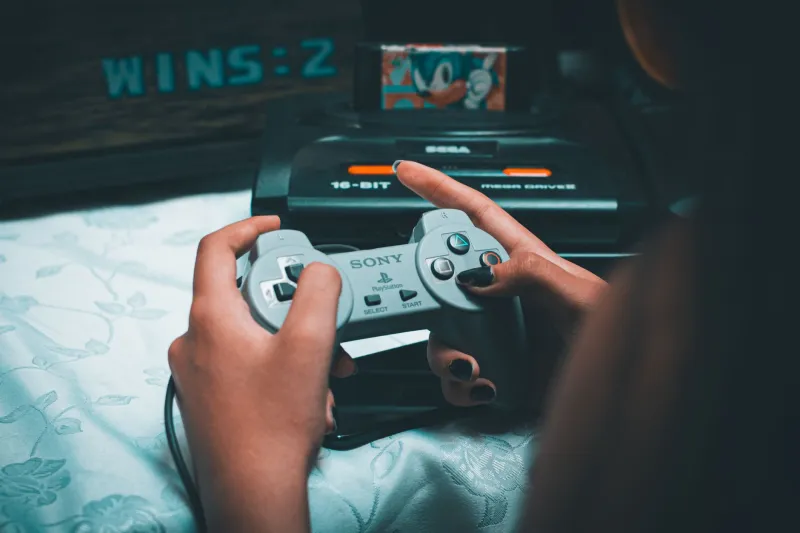
Photo: Lyncconf Games, CC BY-SA 4.0, via Wikimedia Commons
The TV is a hand-me-down CRT sitting on a dresser in a dorm room, and it is a little too warm in here. Three of us are sprawled across two pieces of furniture, one person is on the floor, and exactly one person is holding the controller. It is 2002 and we are playing Onimusha 2, and the person playing is not the best player in the room. That is the entire point.
We all know the rule. When you die, you pass the controller. No arguing, no second chances. The save file is shared property. The room has a job, and the job is watching.
The Game That Let the Room Play Along
Onimusha was not designed to be a spectator sport, but it accidentally became the best one of its generation, and the reasons are mechanical.
First, the camera did the framing for us. Fixed angles mean the action is composed like a stage. Everyone in the room sees the same shot, from the same distance, with the same ominous empty floor in the corner. Nobody has to peer over a shoulder. Nobody is craning to see a minimap. The screen is a picture, and we are all looking at it.
Second, the tells are loud. Genma enemies telegraph with a wind-up, a sound cue, a posture change. A sword swing is a committed, readable promise. That means the audience is not passive. If you have played the game before, you are not just watching a fight, you are reading it a half-second ahead of the player, and the half-second is everything.
Third, and most importantly, death is cheap. Rooms are short. Retries are quick. The penalty is embarrassment and a controller rotation, which is the exact penalty a room full of friends can enforce socially. Compare that to a forty-minute boss attempt in a modern game, where the audience quietly checks out and starts scrolling.
The Friend Who Read the Room
Every group had one. The caller. The person who did not need the controller because they had already memorized the room.
Watch the left side. He is doing the chain thing again. You have one healing item. Save first, save first, save first.
I want to be clear that this was not backseat driving. Backseat driving is annoying. The caller was a role, respected and assigned, like being the one who knows which fuse goes where. They read the room and translated it. They made the player better without ever touching the hardware.
And the caller got something out of it too. There is a specific, underrated pleasure in knowing the fight well enough to narrate it, to call out the timing on a critical hit half a heartbeat before the player commits. You can hear the whole game in your head. You just do not have to be the one who flubs the dodge.
What Streaming Does Not Replace
Let us be fair to 2026. Streaming is wonderful. You can watch a better player than any of your friends, at any hour, with a chat full of strangers making the same jokes. Onimusha runs are out there, well-played and well-commented, and there is real craft in that.
But something structural is missing, and it is consequence.
When you watch a stream, you have no skin in it. When your roommate is on attempt four of a boss with one healing item left and a shared save file full of progress, you are involved. You are leaning forward. You are physically closer to the screen than you would be at home. When the swing lands, the noise in the room is coming from four people at once.
There is also the small matter of the pause button. In a dorm, pausing is a negotiation. Someone needs a drink. Someone needs to explain the plot of the last cutscene because the person who was playing skipped it. Those interruptions are not interruptions. They are the social fabric of the thing. A stream has no pause. A living room does.
How to Bring the Ritual Back in 2026
The good news is that the barrier to entry is a couch and a copy of the 2019 remaster. Here is the rule set, tested by history.
One save file. Shared progress is shared investment. Nobody gets their own run.
The rotation is law. Die, pass it. No exceptions, including the person who insists they almost had it.
The watcher gets the strategy. Player holds the controller. Watcher holds the map in their head. Swap roles when the controller swaps hands.
No phones. A stream in your pocket is the fastest way to turn a room of friends back into a room of strangers.
Ten-minute timer on the pause negotiation. Someone still has to look up where the key goes.
It is a slightly old-fashioned way to spend a Friday night, but the games were built for it. Onimusha is short, sharp, tense, and structured in rooms and corridors, which makes it perfectly sized for a room of people with short attention spans and strong opinions.
Keep the Couch Warm
We talk about preserving games as if it is only about servers and source code and disc rot. The harder thing to preserve is the room. Four people, one TV, a shared save file, and a rule about who holds the controller next.
That ritual was never a lesser version of playing. It was its own thing, and it is one of the reasons so many of us remember a franchise that most of the industry quietly forgot. Onimusha taught a generation how to read a fight out loud.
So boot it up. Invite someone over. Hand them the controller and then take it back the moment they die, because those are the rules and the rules are the whole point.